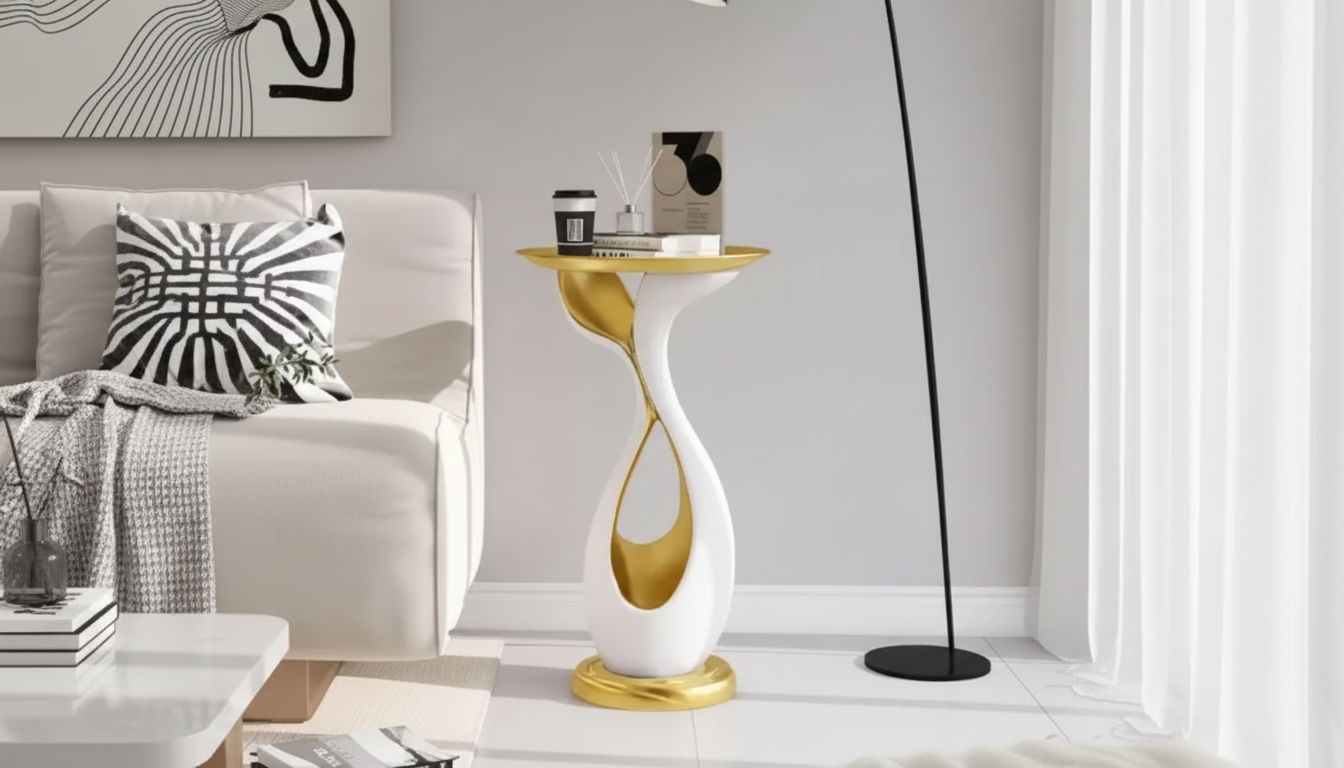
Modern minimalist is a design style that blends the clean lines of modern design with the “less but better” mindset of minimalism. The goal is a space (or product aesthetic) that feels calm, intentional, and uncluttered—where every item earns its place through function, beauty, or both.
Modern minimalist spaces typically feature simple shapes, open layouts, and a restrained color palette. You’ll often see whites, warm grays, soft beiges, or muted earth tones paired with black or charcoal accents. Furniture is streamlined, with minimal ornamentation and clear, geometric silhouettes.
Materials matter just as much as color. Modern minimalism leans on honest, tactile finishes—think light or medium wood, matte metals, stone, linen, cotton, and glass. Instead of lots of decor, the style relies on proportion, negative space, and a few well-chosen focal points (like a statement light fixture or a single large piece of art).
Modern minimalist isn’t about empty rooms—it’s about removing the excess so the remaining pieces feel purposeful and easy to live with.
Items are selected for how they’re used day to day: comfortable seating, smart storage, durable surfaces, and layouts that support real routines.
Clutter is minimized, cords are hidden when possible, and storage is integrated so surfaces can stay clear and restful.
Rather than many small decorative objects, modern minimalism favors fewer, better-made pieces with timeless appeal.
Compared with stark or ultra-industrial minimalism, modern minimalist often feels warmer and more livable. It may incorporate cozy textures, soft lighting, and natural materials while still keeping the overall look crisp and uncluttered. For a deeper breakdown and examples, visit https://klarityn.com/what-is-modern-minimalist/.
Neutral palettes work best—whites, creams, warm grays, taupes, and soft earth tones—supported by a few darker accents like black or charcoal for contrast and definition.





Leave a comment